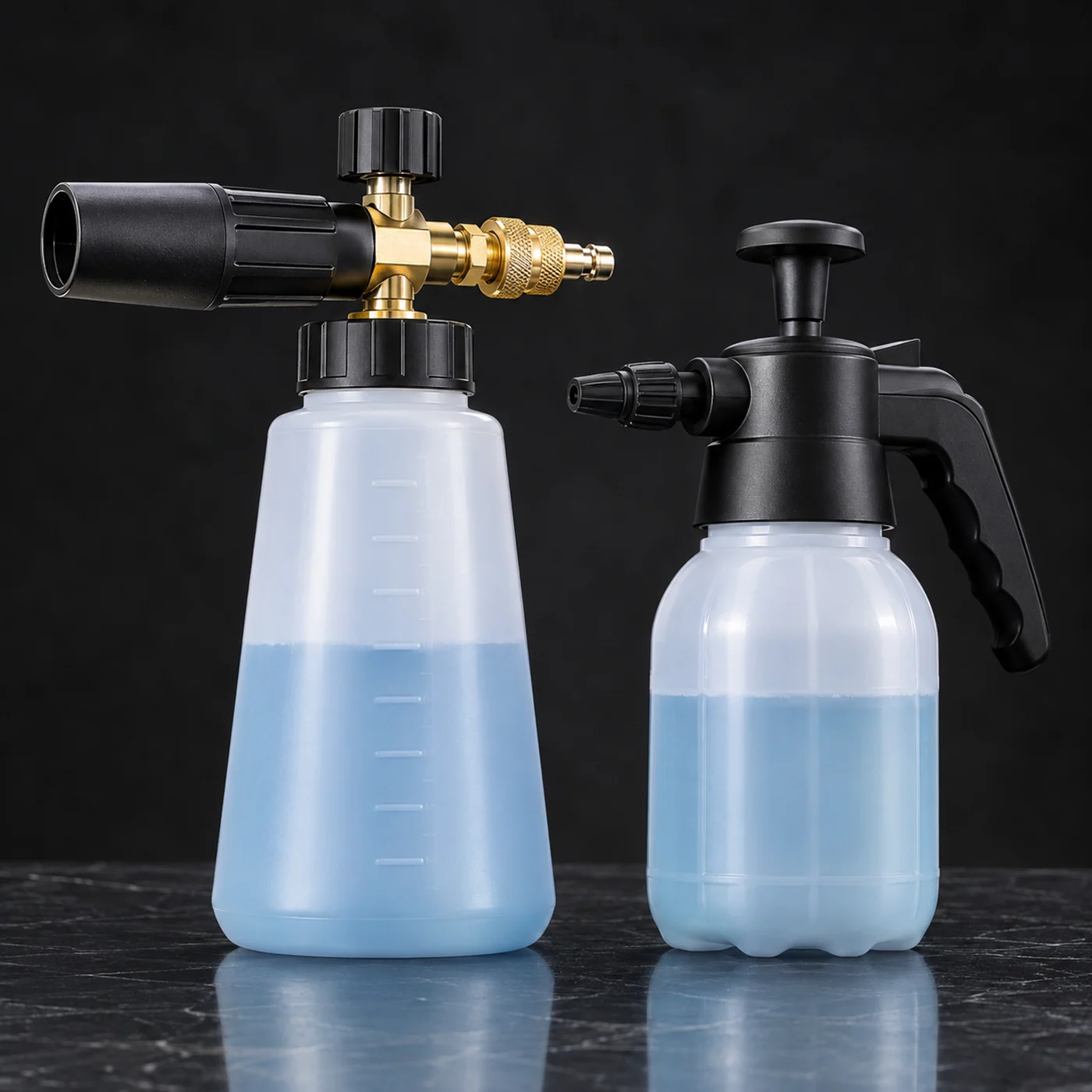
Both tools put product onto a surface. That is where the similarity ends — and most detailers end up owning both.
At a glance
| Foam Cannon | Pump Sprayer | |
|---|---|---|
| Power source | Pressure washer | Hand-pumped, no power needed |
| Output | Thick, clinging foam | Fine mist or narrow stream |
| Coverage | Whole vehicle in minutes | One panel or wheel at a time |
| Best for | Contact-free pre-wash | Wheel cleaner, bug treatment, detailer |
| Setup | Hose, lance, dilution bottle | Fill, pump, spray |
| Water use | Higher | Minimal |
Choose a foam cannon when…
You wash a whole vehicle regularly and want to remove as much grit as possible before touching the paint. The foam blanket is the point: it dwells, lifts and rinses away. If your goal is fewer swirl marks over time, this is the tool that moves the needle most.
Choose a pump sprayer when…
You only need to treat a small area. Wheels, bug-splattered bumpers, door jambs, interior vents and quick-detailer touch-ups are all awkward with a pressure washer and effortless with a handheld sprayer. It also lives happily in a detailing cart with no hose attached.
What about a foam gun that attaches to a garden hose?
A hose-end foamer is a reasonable middle ground if you do not own a pressure washer, but it produces a wetter, thinner foam with less dwell time. It is better than skipping the pre-wash altogether, and not a replacement for a proper cannon.
The practical answer
Start with a foam cannon if full washes are your main routine. Add a pump sprayer for targeted work — most people find the second tool earns its place immediately, because it removes the excuse to skip wheels and tight gaps.
Whatever you choose, rinse both tools with clean water after every session. Clogged nozzles are the most common reason a foamer “stops working”.